Kongnyangi Challenge Copyright Controversy: The Legal Dilemma of Memes in Digital Culture
Copyright Issues Arising from the Spread of Meme Culture
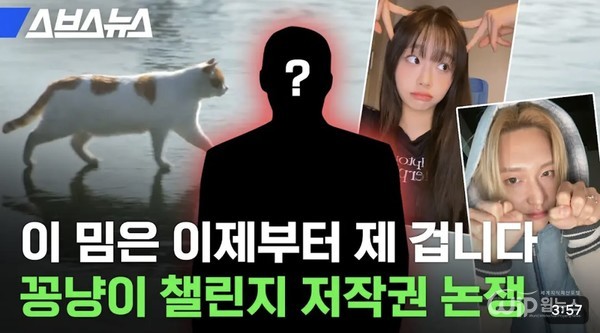
The Kongnyangi Challenge which gained popularity as a theme for celebrity challenges and depicted a frozen cat by the Han River has sparked a significant copyright controversy after a third party registered the audio without permission. The sound was created by remixing a reporters commentary by a creator known as Happy Pizza Bread but the copyright was registered by neither the reporter nor the creator but by a third party. This situation highlights the increasingly complex copyright issues arising from the spread of meme culture underscoring the need for new legal standards to clearly define the rights and responsibilities of creators and consumers.
The term meme originates from Richard Dawkins book The Selfish Gene where it was derived from the Greek word mimema meaning to imitate. Memes stemming from this concept of imitation often start with familiar images movie scenes or photos of celebrities which are then altered and spread infused with humor and satire. Memes have now become a dominant cultural icon in the digital world fundamentally altering how we communicate. Kim Kyung-su author of The Genealogy of Korean Internet Memes which ranked among the top five bestsellers in the fourth week of June 2024 describes internet memes as alternative play based on composite sources involving participation by the general public and as a new form of artistic creation.
However beneath this playful digital phenomenon lies a sharp legal trap—copyright infringement. The explosive spread of memes doesnt just end in fun; it can expose both creators and spreaders to legal risks a fact that many still dont fully grasp. The Korea Copyright Commission warns that if an image with an original creator is used without separate permission issues of reproduction rights and transmission rights may arise. If the content is altered it could infringe on moral rights or derivative work rights. This highlights the importance of adhering to copyright laws when creating and spreading digital content including internet memes.
While creators may make memes based on their works the original copyright holder of the source material often has rights that could be infringed. Moreover when internet users or spreaders modify or share memes in new contexts these actions can also constitute copyright infringement. If a meme is recognized as a derivative work of the original it may receive legal protection but if the copyright holder challenges it a fierce legal battle could ensue. A poorly made meme could land someone in court.
Of course memes are often considered parodies which are frequently protected under the law. Parodies that twist the original work to deliver a social or political message may be considered fair use—a legal principle that allows for limited use of copyrighted material for purposes like non-profit education criticism commentary or news reporting. However not all memes will qualify as parody in this delicate balance. If a meme merely reuses or slightly alters a part of the original work it might not be recognized as a parody and could be considered copyright infringement. The risks increase if the meme is used for commercial purposes or if it significantly distorts the original work potentially leading to a copyright lawsuit.
Internet memes are no longer just a passing trend; they are a social and cultural phenomenon deeply embedded in our daily lives. Yet behind the scenes complex copyright issues lurk. To avoid copyright infringement when creating and spreading memes it is crucial to have a clear understanding of the fair use doctrine and the legal standards for parody. This is why both creators and spreaders must be aware of copyright issues and act responsibly.
To protect the freedom and creativity of memes the legal responsibilities underlying them must not be taken lightly. The legal challenges related to meme protection highlight the need for legal interpretations and regulations that align with the new digital cultural landscape. This will be an important discussion for the future of digital content creation and consumption.
Website: : http://www.wip-news.com/news/articleView.html?idxno=24662