Finding Perfectly Ripe Apples with a Click of a Camera
Rural Development Administration Develops Precise Apple Quality Analysis Method Using Digital Cameras
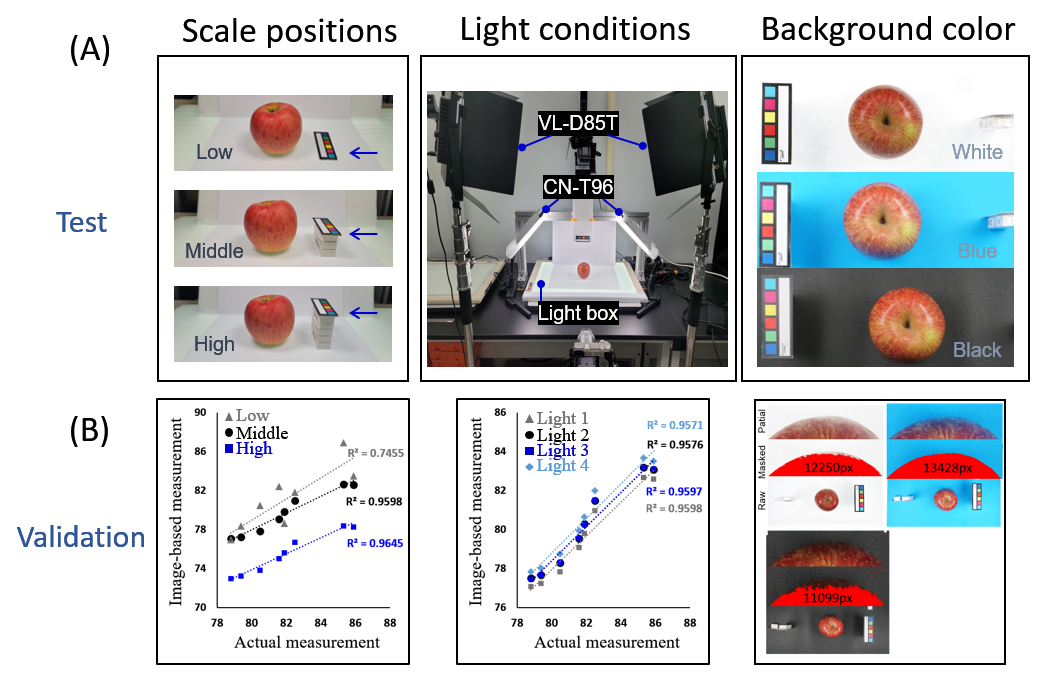
The Rural Development Administration (RDA) led by Commissioner Kwon Jae-han has developed a precise apple analysis method that allows for the quick and accurate sorting of apples by photographing the shape and color of various apple varieties using digital cameras.
Previously developed image-based phenotyping* technologies faced challenges when applied in real-world settings as different testing institutions had different conditions for capturing images.
* Phenotyping: A research field that involves analyzing physical traits using images and various sensors to gather information.
The research team has now systematized this process enabling apples to be photographed using digital or smartphone cameras under prepared conditions. The photos can then be analyzed to assess the shape and color of the apples. An image analysis program connected to the system automates the quality analysis process and extracts the necessary information for sorting.
Additionally the team compared different conditions for fruit photography (lighting background etc.) and provided optimal conditions and standard analysis methods. According to their findings setting the background to blue made it easier to extract images. When the lighting was maintained at around 3000 lux the brightness and saturation of the apples were most accurately captured. The width and height of the fruit were measured through top-down and side-view photography respectively improving accuracy compared to traditional single-indicator measurements from analysis programs.
The research applied these conditions to four apple varieties including the popular Hongro variety and compared the extracted images with actual measured values. The results showed an accuracy of over 96%. Additionally by setting statistical analysis standards based on indicator values the system could quickly sort out misshapen apples based on their shape or color.
The RDA noted that this technology is highly adaptable and can be applied not only to apples but also to other fruits like pears and strawberries. While current sorting machines rely solely on fruit weight this technology offers the potential to selectively sort fruits based on a variety of image indicators aligning with consumer preferences.
The RDA plans to build a database of phenotypic information for use in high-quality fruit sorting in agricultural settings. They also intend to integrate artificial intelligence (AI) technology for real-time analysis in the field applying this approach to other fruits to enhance its usability.
The findings from this research have been published in the Korean Journal of Breeding Science where the team was recognized with an Outstanding Paper Award* for their efforts to promote digital breeding technology in Korea.
* Research on Optimizing RGB Image-Based Apple Shape Measurement for Digital Breeding
Meanwhile the National Institute of Agricultural Sciences and the National Institute of Horticultural and Herbal Science pursued this research as part of their efforts to develop digital technologies needed for apple farms under the Basic Plan for Promoting Digital Agriculture which aims to create a sustainable digital ecosystem for domestic agriculture.
Kim Kyung-hwan head of the Genetic Engineering Division at the RDA stated “This research is an example of developing digital breeding technology by integrating crop phenotyping with field agriculture.” He added “We will continue to accelerate the development of digital breeding technology and use it to address challenges in the agricultural field.”
Website: : http://www.wip-news.com/news/articleView.html?idxno=24973