Traces of Ceremonial Practices for Successful Fortification Found at Pungnap Fortress’ Western Wall
Hanseong-era Engineering Techniques including Large Wooden Pillars Pounded Earth Structures and Animal Sacrifices Discovered… Site Open to the Public (October 17-18)
The National Research Institute of Cultural Heritage (NRICH) and the National Seoul Institute of Cultural Heritage led by Director Kim Ji-yeon have discovered traces of ceremonial practices aimed at ensuring successful fortification along with new insights into the construction techniques of Baekje people during the Hanseong era. These findings were made during excavations at the restoration site of the western wall of Pungnap Fortress in Seoul. The results will be revealed to the public through on-site briefings on October 17 and 18 at 2 p.m. (2 sessions total).
Excavation site: Toseong-ro 2 Songpa-gu Seoul.
Since 2017 the National Seoul Institute of Cultural Heritage has been conducting excavations at the restoration site of the western wall of Pungnap Fortress which have provided key insights into the planning construction process and civil engineering techniques used by Baekje to build their royal fortress. Pungnap Fortress spanning over 3.8 km in circumference was built on an alluvial plain inside the Han River. While this location was optimal for securing both water and land routes it also posed challenges such as flooding and managing the wetland areas behind the riverbank.
To overcome these difficulties the Baekje people utilized the natural levees along the Han River and laid down layers of gravel and organic materials to stabilize the wetland establishing a solid foundation for the fortress walls. The excavations have also confirmed that the pre-existing roadways used before the wall’s construction were connected to the fortress gates and integrated into the internal road network.
Alluvial plain: A flat area created by the deposition of materials like gravel sand and clay from river flooding.
Organic layers: Layers composed of organic materials like reeds herbaceous plants branches and plant fibers used to stabilize wetlands or weak grounds during the construction of large-scale earthen structures.
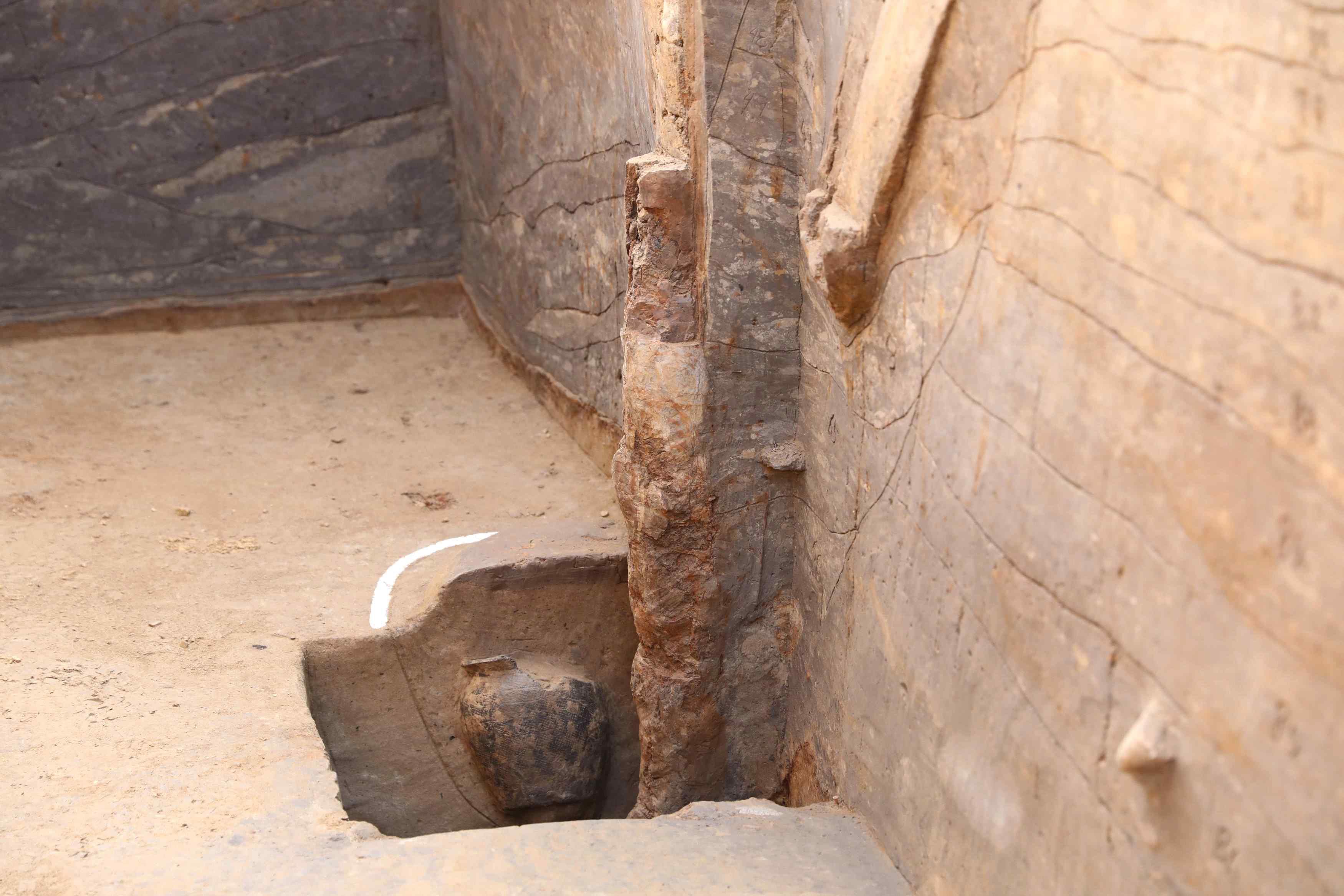
This years excavation has revealed various ceremonial practices conducted by Baekje as they laid the foundation for the royal fortress along the natural levee of the Han River. Several types of earth-stabilizing objects were discovered in the foundation layer of the western wall while numerous traces of animal remains offered as sacrificial contributions were found near the western gate. These ceremonies are believed to have been performed to ensure the success of the fortress construction and mark the official start of this large-scale project.
Earth-stabilizing objects: Symbolic items placed to suppress the earths energy and ensure the safe construction of buildings.
Sacrificial contributions: Items intentionally left as offerings to gods or supernatural beings providing insights into the societys structure and economy.
Burial (매납): The intentional act of burying or hiding items in the ground.
In addition a wooden pillar over 2.5 meters long was discovered believed to have played a structural role similar to modern H-beams used for stability in contemporary buildings.
The fortress wall built using pounded earth techniques features rectangular earth blocks laid out in layers. Various structural elements used for this construction method were also uncovered. The pounded earth method and the associated construction techniques are considered a culmination of civil engineering expertise from the Hanseong era.
Pounded earth technique: A method in which rectangular molds (pounded earth structures) are used to layer and compact different types of soil creating solid blocks (pounded earth blocks) that are placed side by side to form the fortress walls.
The site briefing on the results of this years excavations which provides insights into Baekjes civil engineering will be open to 30 participants per session through advance reservations. Applications can be made on the National Seoul Institute of Cultural Heritage’s website (https://www.nrich.go.kr/seoul/index.do) by submitting the form provided in the on-site briefing announcement. Selected participants will be notified by October 16 at 5 p.m. on the website.
The National Research Institute of Cultural Heritage and the National Seoul Institute of Cultural Heritage will continue to share their excavation findings with the public providing more opportunities to understand the vibrant culture of Baekje during the Hanseong era.
Website: : http://www.wip-news.com/news/articleView.html?idxno=25582