Initiating Deepfake detection mobile app service
Digital content forgery detection technology can be used easily by ordinary people
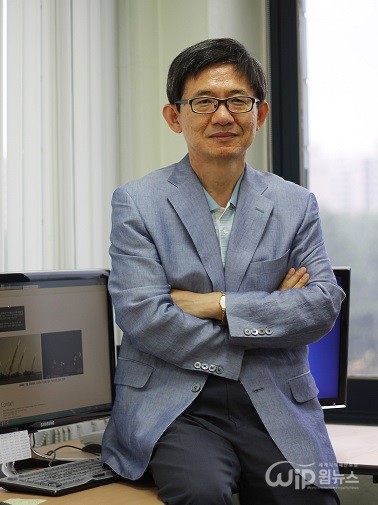
Professor Heung-kyu Lee KAIST School of computing [Source = KAIST]
Professor Heung-kyu Lees research team at KAIST School of computing announced on 30th that they are initiating the deepfake detection based on artificial neural networks and photo forgery detection software called the Kai Catch developed by mobile app form. It is expected that public organizations industries media broadcasting stations portal workers and ordinary people who need to detect forgeries of digital contents can also use it easily.
The mobile application service is significant in that it has entered a practical stage so that ordinary people can easily utilize digital contents forgery detection technology. KAIST is initiating the development of a software called Kai Catch which means catching out a variety of forgery photos in the form of a mobile app which is the first service type in Korea. If you search for Kai Catch on Google Store and download the app you can easily analyze deepfakes and image forgery.
Deepfake technology which mainly targets peoples faces can be divided into three types : The facial replacement facial reproduction and facial attribute conversion. Malicious use of face replacement and face reproduction can cause social confusion through fake news and can be abused in the production of obscene materials and severely violate individual human rights. In addition facial attribute conversion can be exploited for manipulating the video evidence.
The technology developed by the research team was developed with signal processing and artificial intelligence technology applied with fine transition signal trace and fine abnormal signal trace detecting technologies to detect the presence or absence of deepfake regardless of the type of deepfake. Using such core technology the technology analyzes fine transition of the face area and abnormal signal trace in areas where geometric distortion of the face can occur such as nose mouth and face contours to detect deep fake.
In the case of deepfake detection technology if a video of deepfake suspicion in avi or mp4 format is given it is cut separately into individual frame and converts the frame which is for to be analyzed into an image and then deepfake detection is performed. Normal detection is possible unless the face in the video is too small (resolution 128x128 or less) or the face of the person in the video is cut considerably. Therefore if you cut a frame of the video into an image and upload it to the Kai Catch app you can easily check if there is a deepfake. The analysis results are displayed from 0 to 100 (%) and it is judged as the higher the number the higher the probability of deepfake percentage goes up.
In the case of deepfake detection technology if a video of deepfake suspicion in avi or mp4 format is given it converts the frame to be analyzed into an image and then deepfake detection is performed. Normal detection is possible unless the face in the video is too small (resolution 128x128 or less) or the face of the person in the video is cut considerably. Therefore if you cut a frame of the video into an image and upload it to the Kai Catch app you can easily check if there is a deep fake. The analysis results are displayed from 0 to 100 (%) and the higher the number the higher the probability of deepfake.
In the case of photo forgery detection technology as well users can receive the results of the forgery analysis by uploading the image to the Kai Catch app. Kai Catch can manage all JPEG images based on 50 standard quantization tables and over 1000 non-standardization quantization tables including uncompressed and non-loss compressed BMP TIFF PNG etc. When suspected photo forgery image is uploaded it elicit 2 analyzed image of the visualized result of the image and in the analyzed image if the color of major area included with suspicious forgery trait is significantly different with the near area or there are only various colors in the near area normal people can easily detect that the major area is forged.
The development of the mobile type forgery detection app which is developed is the first app in Korea and it is a service technology rarely found in developed countries. Professor Heung-kyu Lee said Kai Catch was developed to have versatility for various types of transition using artificial intelligence and cutting-edge technologies which is fine abnormal signal trace technology. and added Even if we use the transition technology that we cannot predict or do not know it can be detected in 90% of high reliablity.
He mentioned This time it was developed as app service technology working only in Android-based mobile environment. However we will soon release English Chinese and Japanese apps as well as Apple iOS-based applications. He added Commercializing the forgery detection technology using different method compare to the existing ones we will add and equip into Kai Catch and strive to drastically lower the extraordinary cases that could not be detected.
Meanwhile this research was conducted in collaboration with KAIST founder Digital Innotech (http://www.kaicatch.com) and Industry-Academy cooperation research.

Kai Catch App First Screen [Source = KAIST]
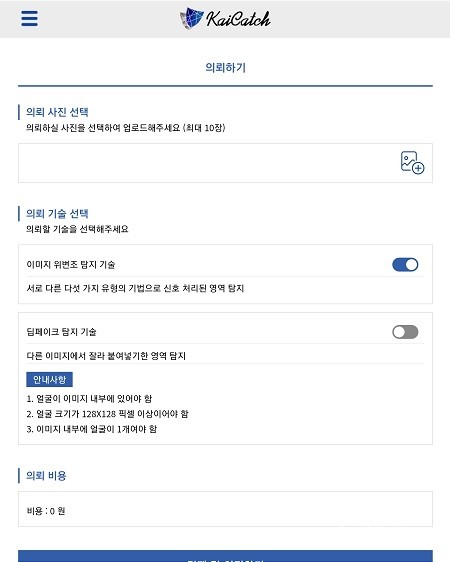
Image Analysis Request Screen [Source = KAIST]
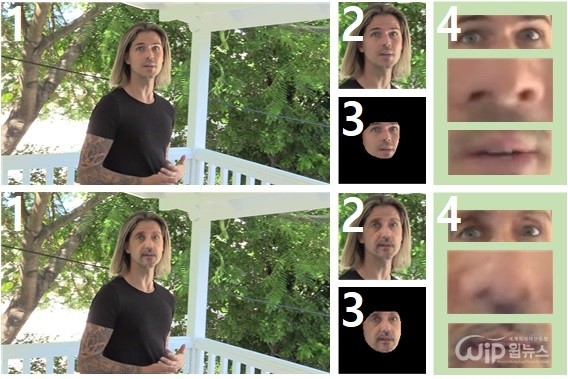
Deepfake Detection Method (Top - Original video Bottom - Deepfake video) [Source = KAIST]
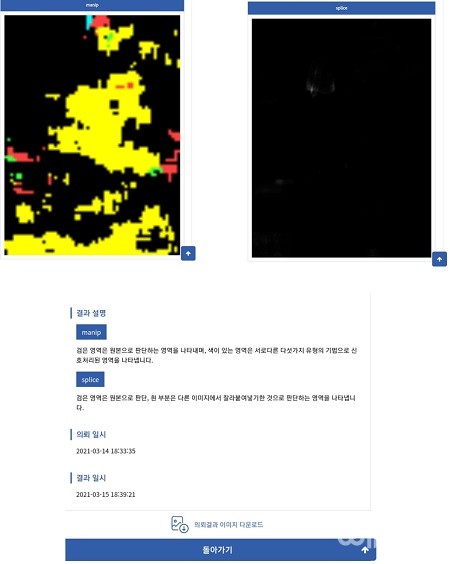
Image analysis result of the forgery photo and a brief description [Source = KAIST]
Website: : http://www.wip-news.com/news/articleView.html?idxno=6123