Increase of Article 101(Patent law) dismissal cases in Supreme Court of the United States after Bilski v. Kappos judgement
John WHEALAN George Washington University Law School Professor Starting from 2010 according to article 101 judged cases which are unable to achieve patent because of defects in patent eligibility increased into hundreds of cases.
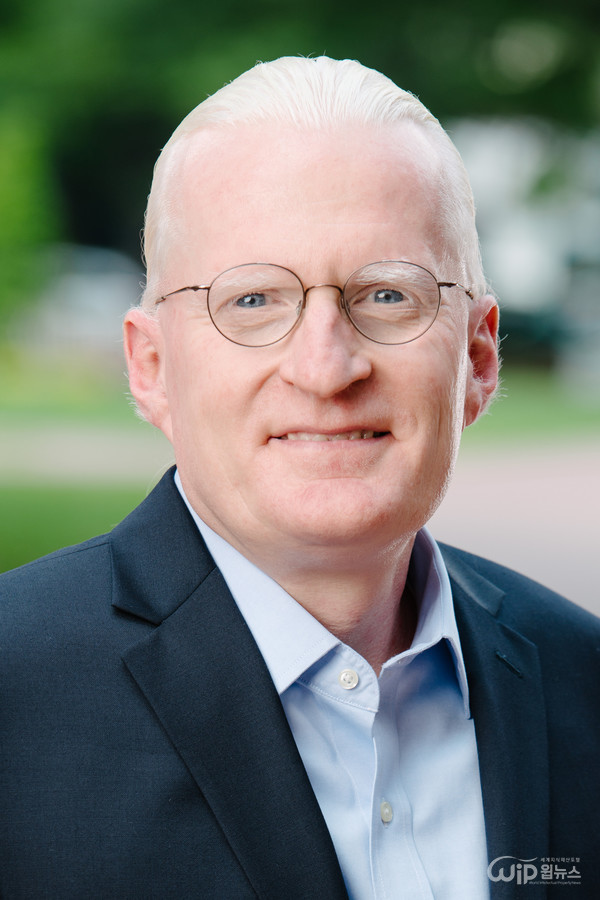
Professor John WHEALAN George Washington University Law School U.S.A
The 2020 International IP Court Conference an international exchange event of the professionals in the IP field consisting of five sessions which are status of international trials high technology and patent eligibility major issues in design litigation cross-border patent infringement and mock trials has been ended successfully on November 12.
The session 2 of the conference covered opinions of the speakers from the United States Australia Germany China and Korea about Advanced technology and eligibility of patent : Focusing on Biotechnology and Software Inventions
Professor John WHEALAN who participated the conference online is currently teaching at George Washington University Law School. He got a JD in Havard University and for the past 10 years worked as adjunct professor as at the Franklin Center George Mason University School of Law and Chicago-Kent College of Law.
He worked at United State Patent and Trademark Ofice(USPTO) as deputy general counsel for intellectual property law and solicitor since 2001. When he was working at the USPTO he was in charge of all intellectual property lawsuits and expressed opinions about 30 cases of United States courts of appeals as professor and have been submitting statement of opinion in more than 250 cases. Before 2001 he worked in United States International Trade Commission as an intellectual property attorney and prior to then worked as law clerk for Judge Randall R.Rader.
Q: Under the legal system of your country please explain are there cases of patent exclusion that fails to meet the patentable subject matter before judging the reasons for patent invalidation such as novelty non-obviousness and lack of sufficient description. If there are cases in your court please explain the cases of the judgement and if there is any discussion in the academic field please introduce it together.
A: In the past 10 years according to Article 101 of the 35 U.S.C(United States Code) there have been hundreds of affairs that could not achieve patent due to the flaw of patentable subject matter and before 2010 this occurred infrequently. However after the sentence of Bilski v. Kappos by the Supreme Court of the United States in 2010 the number of Article 101 dismissals began to increase. After the Bilski cases the Supreme Court of the United States judged that there are no patentable subject matter of all three cases related to Article 101 such as Alice Corp. v. CLS Bank Intl 573 U.S. 208(2014)(Alice) Assn for Molecular Pathology v. Myriad Genetics Inc. 569 U.S.576(2013)(Myriad) and Mayo Collaborative Servies v. Prometheus Labs. Inc.(2012)(Prometheus).
This conference held on November 12 2020 was held at the Grand Hyatt Hotel in Seoul under the theme of Court IP and Globalization with the method using parallel online and offline to prevent the spread out of Covid 19. Focusing on IP5 which are United States China Japan and Germany about 300 IP related professionals from 8 nations around the world participated online and offline to share and progress IP issues with various cases.
The 2020 International IP Court Conference was ended in great success raising the status of the IP international trial in Korea covering five sessions and mock trials.
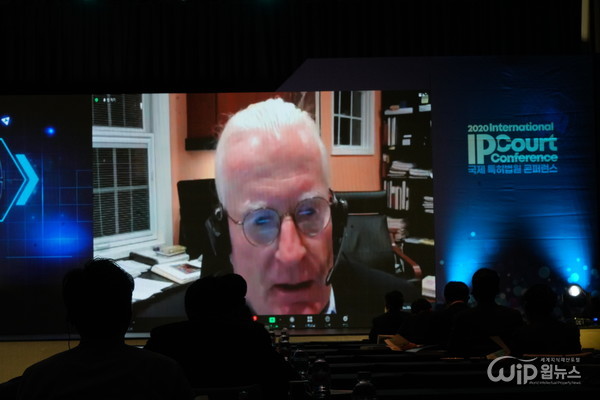
Photo of venue participation of the real-time online
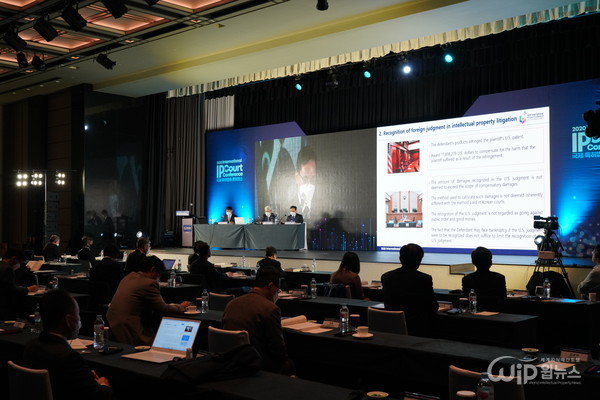
2020 International IP Court conference venue
Website: : https://www.wip-news.com/news/articleView.html?idxno=4186