Analysis of Abies Koreana Genome Reveals Reasons for Plant Diversity in Northeast Asia
Hypothesis Confirmed: Terrain Complexity and Cenozoic Climate Variations Are Key Factors
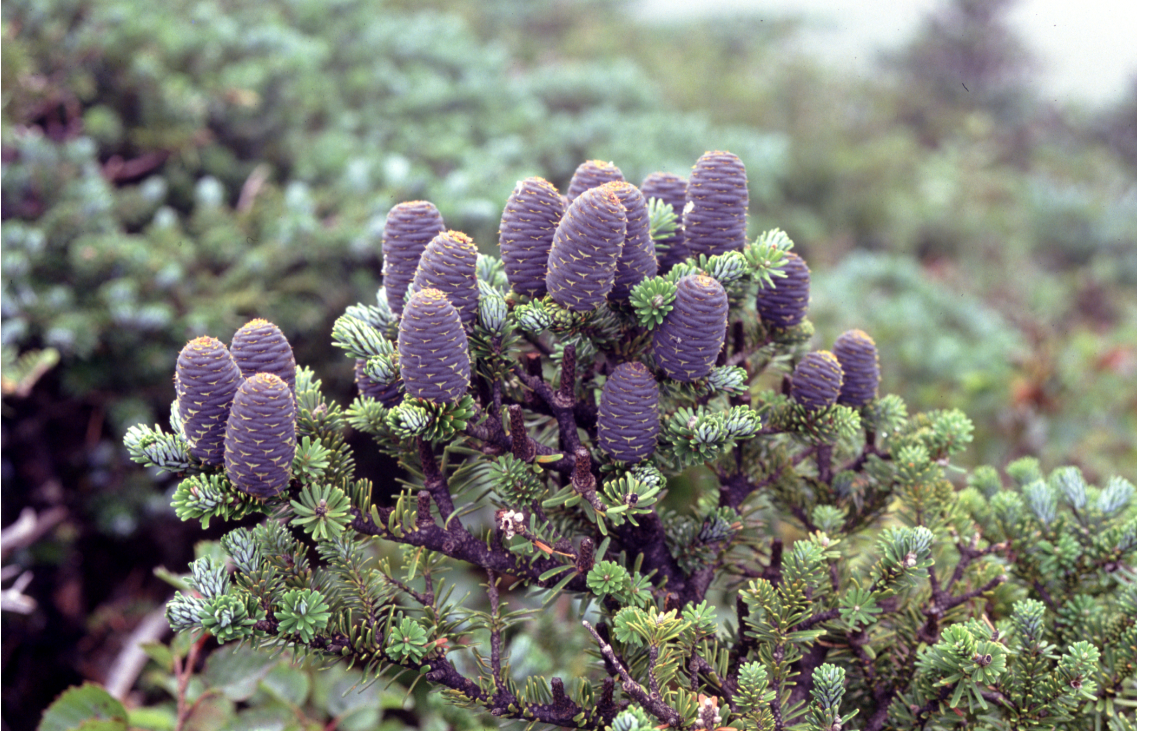
The National Institute of Biological Resources (NIBR) under the Ministry of Environment announced that the hypothesis suggesting terrain complexity and Cenozoic climate fluctuations as reasons for the greater plant diversity in Northeast Asia compared to North America has been confirmed through the genome analysis of the Abies species complex.
This hypothesis was first proposed by Hong Qian from the Illinois State Museum and Robert E. Ricklefs from the University of Missouri in a 2000 Nature journal article. They argued that the complex terrain and climate changes during the Cenozoic era contributed to the higher plant diversity in Northeast Asia.
The Korean fir also known as Abies koreana a native species found on Mount Halla in Jeju Island and subalpine zones in southern Korea (e.g. Jirisan Deogyusan) was the subject of this study. Close relatives of this species include Abies nephrolepis (Khingan fir) Abies sachalinensis (Sakhalin fir) and Abies veitchii (Veitchs fir) with the latter being endemic to Japan. The Khingan fir in particular is almost indistinguishable from the Korean fir except for the orientation of the cone scales which makes them difficult to differentiate even for experts.
Since 2013 the NIBR has been conducting a joint study involving ten institutions from five countries including South Korea Japan China Russia and the United States to analyze the genomic variations of these Abies species.
The research confirmed a circular genetic connectivity around the East Sea (Sea of Japan) encompassing the Korean Peninsula Japan China and Russia. This genetic pattern suggests that during the cycles of glacial and interglacial periods in the Cenozoic era the distribution ranges of these trees expanded and contracted. The terrain features such as seas and mountain ranges prevented inter-species contact leading to species differentiation. When the climate changed hybridization occurred as species re-encountered each other thereby increasing regional plant diversity.
For instance the similarity between the Korean fir and the Khingan fir in central Korean mountains is attributed to hybridization events that occurred when the temperature rose after the last glacial period (about 20000 years ago).
Additionally maternal lineage analysis revealed the presence of North American genetic elements in the close relatives of the Korean fir. This indicates that North American maternal genes were introduced through the Bering land bridge during the glacial periods contributing to the diversity of the Abies species complex.
The findings of this study will be published in the Journal of Biogeography later this year.
Seo Min-hwan the director of NIBR stated This research has clarified the reasons for the plant diversity in Northeast Asia which were not definitively proven before. We plan to continue analyzing genomes to estimate the history of species proliferation and decline for biodiversity conservation.
Website: : http://www.wip-news.com/news/articleView.html?idxno=24215